
RAIN CITY DOOM FEST 2026
YOB, King Woman, Earthless, Christian Mistress

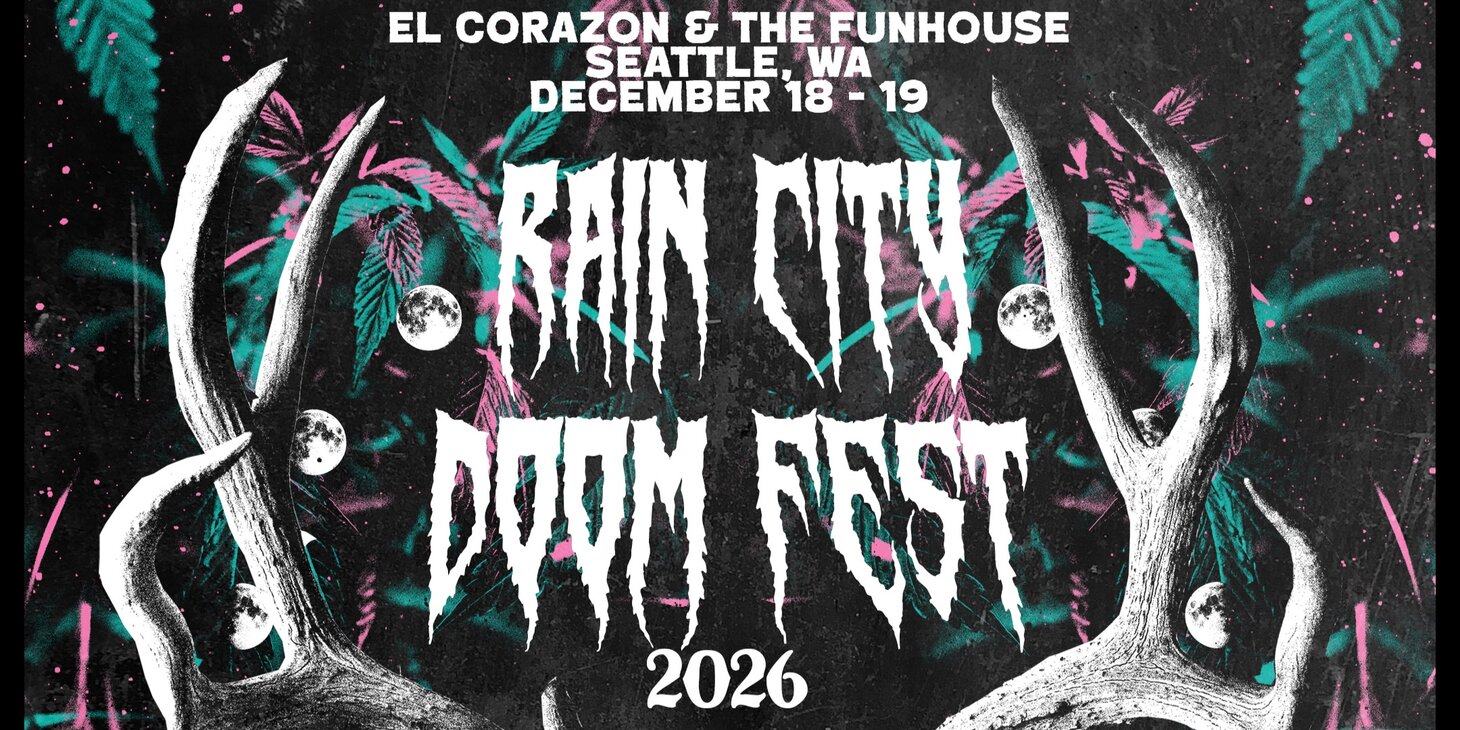
RAIN CITY DOOM FEST 2026
RAIN CITY DOOM FEST 2026
Two nights at El Corazon & The Funhouse featuring:
YOB
KING WOMAN
EARTHLESS
CHRISTIAN MISTRESS
And many more TBA...
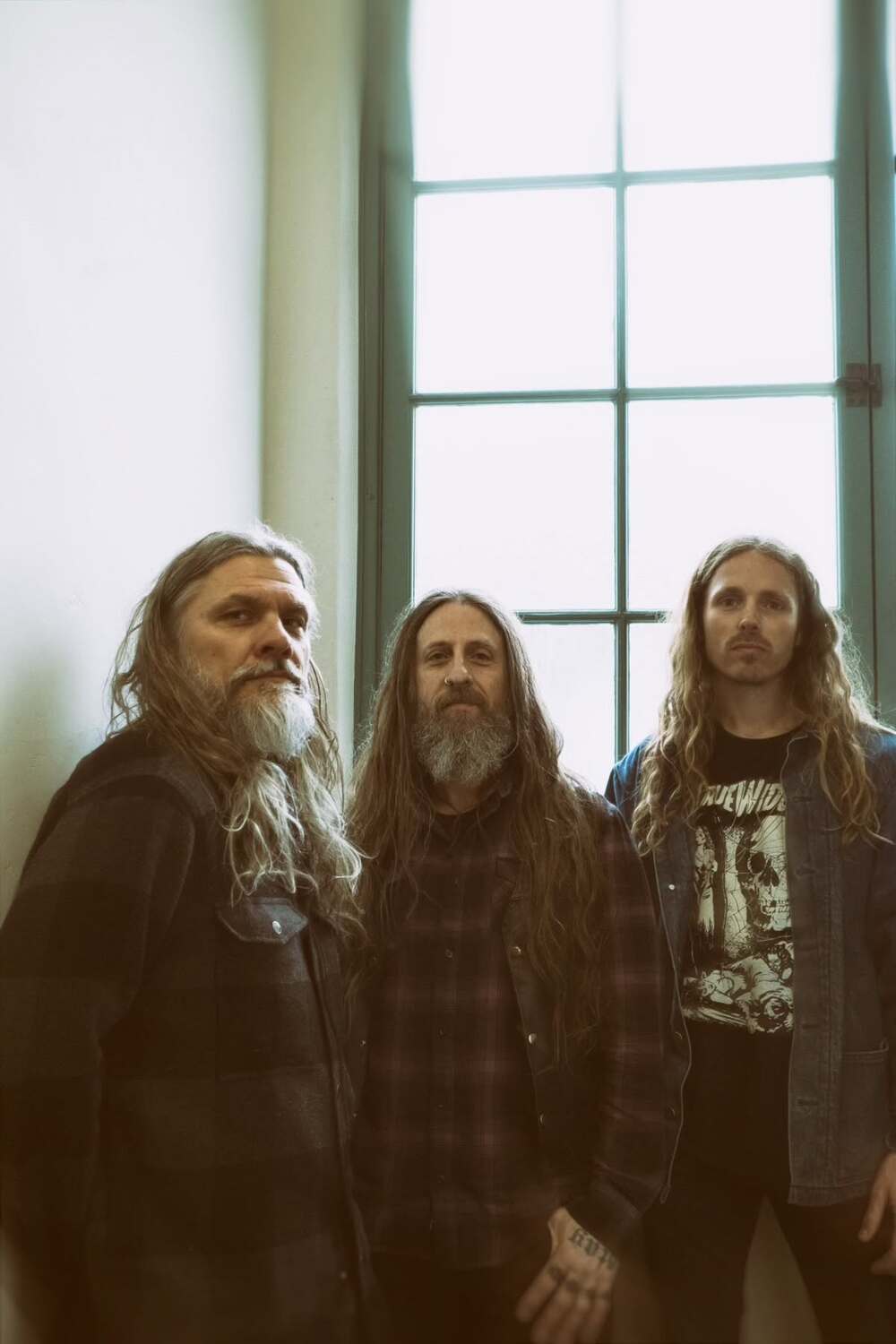
YOB
"Slow is fast," says Mike Scheidt, singer, guitarist, and creative nucleus of the Oregon-based doom metal trio YOB. It's a concept that speaks to both the immense propulsion of their megalithic compositions and the way their artistry has patiently unfurled across their 25-year tenure. Change and revelation take time. You can't snap yourself into epiphany and you can't force yourself into another shape. You have to trudge. It doesn't mean you're failing. You persevere through the muck or you stop and you sink. There is no third way.
YOB's music spreads across a plain where vast weather systems converge. Since sharing their first demo in 2000, the band has slowly, graciously gathered a devoted audience into their planetary orbit. Together with bassist Aaron Rieseberg and drummer Dave French, Scheidt tethers pendulous riffs to sky-flung vocals, sinking deep into the trenches and then cresting through the clouds. From the stoner rock ripples of their 2002 debut Elaborations of Carbon through the cavernous echoes of 2018's Our Raw Heart, YOB wield their totalizing gravity to bore into the light that hides in everything.
Scheidt was reared on punk and metal in the eighties and nineties: parallel outsider ecosystems that lent language and dimension to deep feelings of unbelonging. "Music became for me what I think it is for everybody: an anchor," he says. "It’s something that soothes; it’s something that lets you feel the intensity of anger without the damage of anger." He turned toward doom after seeing Cathedral perform in Portland in the early nineties. "I was hanging out in the back. Then Cathedral started playing and it took maybe ten minutes for me to go from the back of the room to wedging myself against the front of the stage," Scheidt remembers. "It changed my life. Before then I was in punk bands. After that, I started to play slower and lower."
Toward the end of the nineties, Scheidt started writing songs in the stoner doom tradition of Black Sabbath and Sleep. He dubbed his new project YOB and submitted its first demo to stonerrock.com, one of many online musical communities that sprung up during the explosion of home internet service at the end of the millennium. At the time, Scheidt was busy parenting his three young children and didn't expect the recording to lead to much. "I just submitted the demo because I wanted to be a part of the community," says Scheidt. "There was no idea of anything beyond that. Life was very busy and I had other priorities. Everything that came afterwards was surprise after surprise after surprise."
A warm reception on stonerrock.com sparked label interest, and YOB officially debuted with Elaborations of Carbon, a refinement and expansion of the blues-based stoner rock of their demo. The psychedelic romps of Catharsis followed in 2003, while 2004's The Illusion of Motion further deepened YOB's absorbing weight. In 2005, The Unreal Never Lived nudged Scheidt's devotional practices closer to the forefront of his lyrics. "I’m a longtime practitioner of Buddhism with a nod to Advaita Vedanta," he says. "I’m a skeptical practitioner in the sense that certain beliefs are either things I don’t grab onto or I take a slow approach. But it was all very much an attempt to solve my own suffering and connect to a deeper world than the one I was raised to believe in." The album's title references a quote from Sri Nisargadatta Maharaj, a Hindu spiritual teacher whose work found a wide audience among Western seekers with the 1973 publication of the book I Am That: "The real does not die, the unreal never lived."
"It’s just about getting to know reality as it is before you can think about it," says Scheidt of his spiritual practice. "It’s already there. Whatever’s true is true right now, regardless of what we say or believe about it."
Following two monthlong tours in the middle of the 2000s, YOB disbanded in 2005. News of their breakup drew the curiosity of new listeners, and their audience grew through word of mouth during four years of dormancy. By the time YOB regrouped in 2009, their records were selling better than ever, and they were playing to bigger and bigger rooms. A new chapter began with 2009's The Great Cessation. YOB worked steadily, slowing the pace of their output and growing their audience organically with more extensive touring. Their 2011 album Atma -- named after the concept of the truest, most expansive self in Hinduism and Buddhism -- earned a nod on SPIN's top 50 albums of the year.
In early 2012, YOB opened for Tool on a string of East Coast shows, where they learned to fill arenas with their singular galactic sludge. Two years later, the 2014 album Clearing the Path to Ascend notched a new peak in the band's snowballing acclaim. "I remember getting off a plane to play sold out shows at St. Vitus in Brooklyn, and my phone was blowing up that we had got metal record of the year in Rolling Stone," says Scheidt. "I was like, what is all this about? It was something you can’t ask for. It was just there."
Anyone who's gone to a YOB concert knows the distinct quality of attention the band commands. To see them live is to surrender completely, awash in pulverizing sound. The sheer mass of the music dislodges consciousness from its habitual patterns; dissolve into YOB and you'll find yourself rewritten upon surfacing.
"The crowd and the band are not two things," says Scheidt. "Over time, playing live has become much less about escape for ourselves and much more about the community of people that have brought us there. Our intention is to offer a space where all of us together can come up for air from the daily struggle. Our music is medicine for us. If it’s that for anyone else, it’s an immense honor.”
Onstage, French, Rieseberg, and Scheidt continually reforge songs from deep in YOB’s catalog. Compositions evolve and grow along with the band, taking on lives of their own over time. "We’re a better band than when we started. We’re a clearer band. We’re much better at focusing within the relaxation that comes from deep water,” Scheidt continues. “Dave is a MacGuyver multi-instrumentalist and an immensely skilled human who seems to have a solution to any obstacle that arises. Aaron is a multi-instrumentalist as well. A deep student of the bass, he whips up thunder with ease, calling on decades of experience as an ever-reaching, forward-thinking musician. Anything I do is inseparable from the wisdom, knowledge, and skills of Aaron and Dave. Together, we are YOB.”
YOB point toward spiritual queries with the reminder that it's the asking, not the answering, that drives you deepest. "It's easy to try and bypass the feet-in-the-mud work: to hope for some magical moment where you become enlightened and then it all falls off like a husk and it’s nothing but blue skies forever," says Scheidt. "I think a lot of people go through that stage. Eventually, you come out the other side and realize that there is no shortcut. You have to really slow down, really watch that one breath, really contemplate questions that are naggingly unanswered." With its constant searching and searing heft, YOB's music sings across the nerves and yanks the mind back into the moment. It wrestles you to the ground so you can bask in the light of the sky.
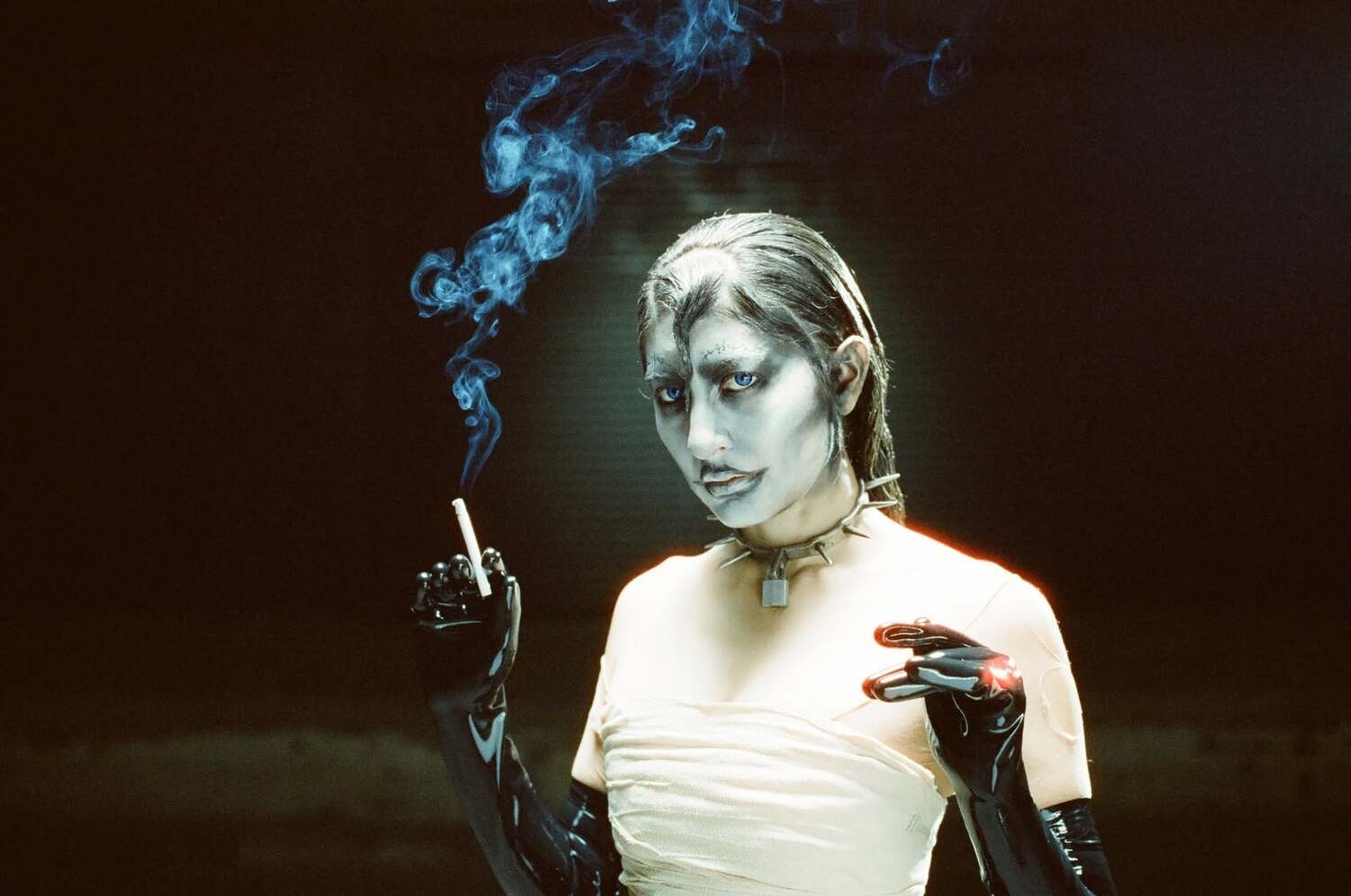
KING WOMAN
King Woman is an American doom metal band from San Francisco, California, formed by singer/guitarist Kristina Esfandiari. The band's lyrics largely address Esfandiari's childhood years in a cult-like charismatic Christian community in Northern California.
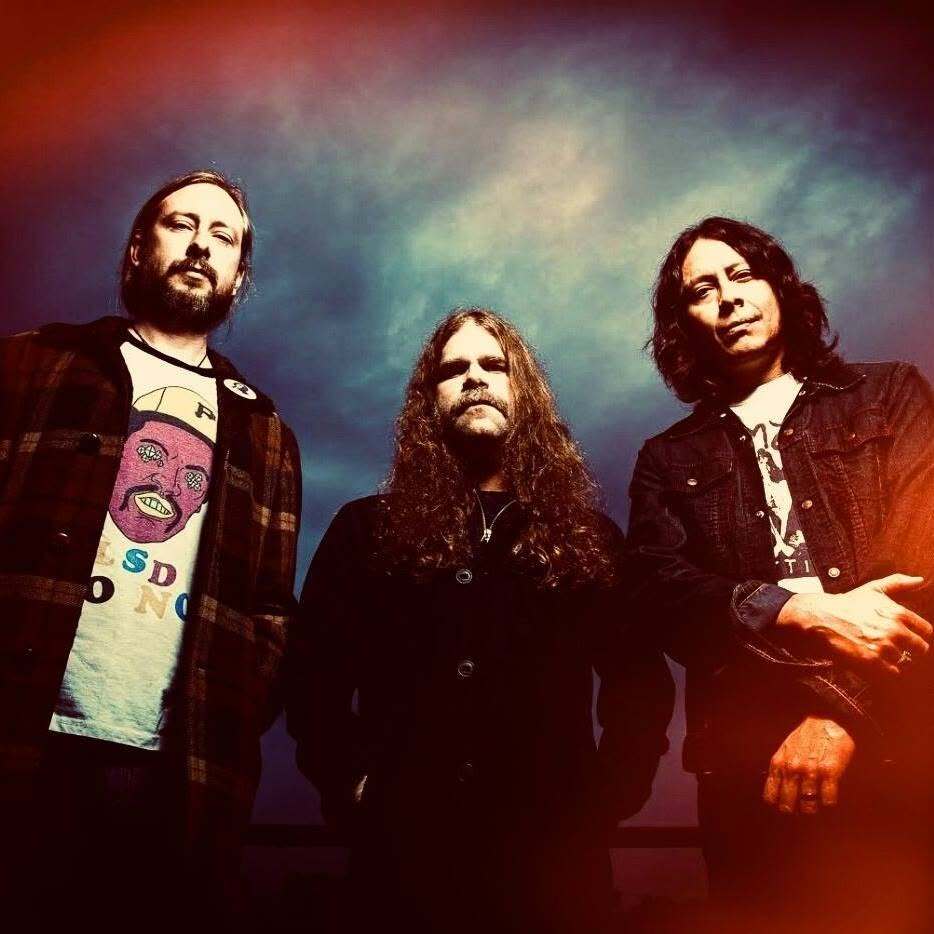
There’s an ancient Japanese legend in which a horde of demons, ghosts and other terrifying ghouls descend upon the sleeping villages once a year. Known as Hyakki Yagyō, or the “Night Parade of One Hundred Demons,” one version of the tale states that anyone who witnesses this otherworldly procession will die instantly—or be carried off by the creatures of the night. As a result, the villagers hide in their homes, lest they become victims of these supernatural invaders.
Such is the inspiration for the latest album from Earthless. “My son is really into mythical creatures and old folk stories about monsters and ghosts,” bassist Mike Eginton explains. “We came across the ‘Night Parade of One Hundred Demons’ in a book of traditional Japanese ghost stories. I like the idea of people hiding and being able to hear the madness but not see it. It’s the fear of the unknown.”
Whereas 2018’s Black Heaven featured shorter songs and vocals from guitarist Isaiah Mitchell on much of the album—an unprecedented move for the San Diego power trio—their latest is a return to the epic instrumentals Earthless made their unmistakable name on. Night Parade Of One Hundred Demons is comprised of two monster songs—the 41-minute, two-part title track and the 20-minute “Death To The Red Sun.”
“Originally, we were trying to figure out how to condense the title track so it would fit onto one side of an LP,” drummer Mario Rubalcaba explains. “But the more we kept playing, the more we kept finding different places to go with it. We eventually just decided to let it breathe and go long.”
The scenario that allowed for this kind of exploration was a stark contrast to that of Black Heaven. At that point, Mitchell was living in the Bay Area, which made it difficult for the band to get together and work on the type of long instrumental pieces they’re known for. But in March 2020, the guitarist moved back to San Diego. More specifically, he moved back the night the pandemic lockdown kicked in. Bad timing, perhaps—or maybe perfect timing.
“With Isaiah here, we were able to get together once or twice a week to work on these jams,” Rubalcaba says. “We got back to our original songwriting process of just playing and building off each other little by little. And we actually had the time to do that, which was creatively inspiring.”
Plus, they were all on the same page about not wanting to do another record with vocals. “In a way, I think this album was a reaction to our last record,” Eginton says. “Black Heaven was outside our comfort zone. I think it was a good record, but it was challenging to write songs in a more traditional verse-chorus-verse format. This one was more enjoyable. I’m sure we’ll do more vocal tracks in the future, but for the time being I see that album as a one-off.”
Given the record’s inspiration, it should come as no surprise that Night Parade Of One Hundred Demons strikes a more sinister tone than the rest of the band’s catalogue. “It definitely has a darker, almost evil kind of vibe compared to stuff we’ve done in the past,” Rubalcaba says. “There’s more paranoia and noise, and some of Isaiah’s whammy-bar stuff kind of reminds me of these Jeff Hanneman moments in Reign In Blood, where it just seems like everything is going to hell. It’s pretty fun.”
Night Parade Of One Hundred Demons was recorded in San Diego with Rubalcaba’s childhood friend Ben Moore, who’s worked with everyone from Diamanda Galas and Burt Bacharach to Ceremony and Hot Snakes. When Eginton wasn’t tracking his bass parts, he worked on the album’s incredible sleeve art. “He really dedicated himself to the project,” Rubalcaba says. “He’d be drawing in the studio with, like, a coal-miner’s lamp on his head while we were doing overdubs. He really knocked it out of the park.”
“I basically wanted to draw my interpretation of the folk story,” Eginton explains. “I started researching the different Yōkai—the demons—and really got into it. It was really cool reading about where they came from and what their interactions with humans were. Then I tried to create what I imagined the event might look like. I didn’t get a hundred in there, but I got quite a few.”
All told, Night Parade Of One Hundred Demons isn’t just a return to the band’s traditional format—it’s a return to their very beginnings. “This album actually has the very first Earthless riff in it,” Eginton reveals. “We just recorded it 20 years after we wrote it. But we’re really happy with how this record came out. We feel it might be our finest to date.”
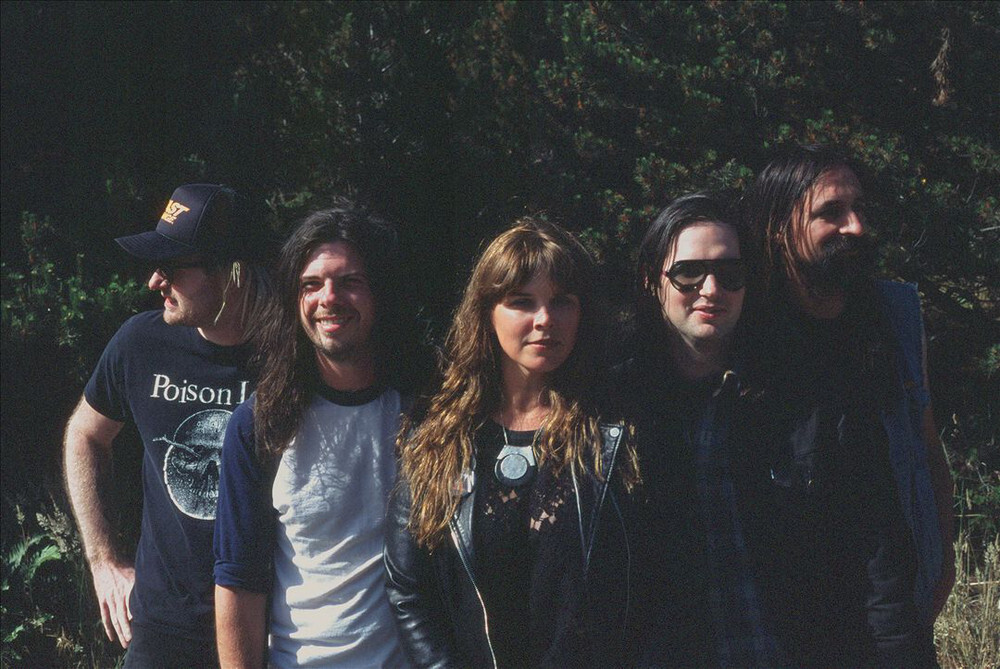
Olympia, Washington's Christian Mistress fly in the face of the region's grunge-birthing reputation with a sound representing what was arguably the strongest musical style laid low by the flannel revolution: heavy metal. In fact, since coming together in 2008, band members Ryan McClain (guitar), Oscar Sparbel (guitar), Johnny Wulf (bass), Rueben Storey (drums), and raspy-voiced front-woman Christine Davis (ex-Buried Blood), have set their studded watches back in time, focusing squarely on the raw, unsophisticated musical aesthetic typical of the New Wave of British Heavy Metal, circa 1979. This direction was previewed on a 2009 demo and single, earning eager blessings from many underground metal illuminati, most notably Darkthrone's Fenriz, and paved the way to Christian Mistress' eventual hook-up with the 20-Buck Spin label, which released the band's six-song debut mini-album, Agony and Opium, in 2010. ~ Eduardo Rivadavia, Rovi