Mercy Music
Mercy Music
UsVsThem, Pretty Deadly, Mindbender, College Radio


Mercy Music


MERCY MUSIC
Some may find it hard to believe, but there once was a time where the very notion of “punk rock” was considered absolutely fleeting. It was fad-driven stuff, dismissed by many corners of the music industry, just like disco and fictional TV bands. (Ask your grandparents about The Partridge Family after you get done binging on Daisy Jones And The Six.) When the Sex Pistols yelled “no future” within the genre, various ends of the music business agreed with them. And then The Ramones, The Clash, The Buzzcocks and all their later proteges—including a trio of extremely talented dorks calling themselves Green Day—put an end to that outmoded attitude. Punk was clearly the new voice of youth. It just took a while to discover it, pre-internet and all.
The big question is: Can you develop as a human and still be punk? These days, it seems that the p-word is used as shorthand for “music played on guitars quickly and loudly” or as jargon for marketers to define a certain kind of “attitude” in whatever product they're trying to sell you. And we can’t forget about the legion of emo dudes singing through their adenoids about how girls hate them or how life is one big high school locker to get shoved into. This is not the future of punk early adopters had envisioned.
It’s certainly not the vision Brendan Scholz had for punk. The guitarist frontman for Las Vegas-based Mercy Music was playing guitar and writing songs before his 10th birthday. His version of punk is as poetic as the Class Of ‘77 forebears and as strident as outfits such as Rancid and Jawbreaker. Most importantly, Scholz sees punk as a genuine coping mechanism for a new era where life, no matter how amazing it can be, can come down on you hard. “It's just always what I wanted to do,” he says. “From whatever age, I‘ve had a desire to do something creatively. I started playing guitar when I was 9 and started doing solo shows shortly after, like fourth and fifth grade. [Playing and performing] has always been an extension of myself.” Scholz’ creative and personal raison d’etre is summed up nicely on Mercy Music’s latest, What You Stand To Lose, issued by Double Helix in late 2023. Produced by Descedents drummer Bill Stevenson, the album distills the trio’s essence via the streamlined energy of bassist Jarred Cooper and journeyman drummer Ryan Seaman, as well as Scholz’s prism of bad news couched in effervescent songs. Mercy Music sticks out from the morass of their contemporaries thanks to their leader’s considerable six-string skills and his unerring ability to retro-fit the vibe of a song.
But Scholz’s motivation is significantly different from most of the bro-types who are big on networking and short on the empathy that creates great songs. He’s willing to navigate the brutality of the music business simply because, well, he’s hardwired for it. He simply can’t not do it. “That nails it,” he says with equal parts honesty and resignation. “For me, [pursuing self-expression] was always there. As a kid, obviously you have life goals and of course, everybody wants to be a rock star and rich and famous. But when you're 18 or whatever, your goal set changes and you’d just like to have some kind of longevity or maybe leave something behind of yourself, maybe some sort of a legacy. I continue to do it regardless of accolades or recognition or whatever people get into it for. Of course, there are times everyone wants to walk away [from the music industry], but I don't think it's in me to do so, despite it being fucking brutal.” He’s not being dramatic. Scholz was always on the cusp of a breakthrough. As a teenager, he had hooked up with Ryan Green, who was responsible for recording a number of releases on the Fat Wreck Chords label. But after a few sessions, nothing ever panned out for him. Scholz formed another band, Lydia Vance (a femme fatale from Charles Bukowski’s book, Women), whose debut was produced by Michael Elvis Baskette. (The master tapes of the unreleased record are probably resting in a bottom left-side desk drawer belonging to some major-label junior executive.) At the same time, Baskette was putting together a new band project called Perfect Like Me and enlisted Seaman for the drum throne. Seaman and Scholz became acquaintances since both bands were on the same showcase bill in Vegas. Both bands were done before they started: Seaman went off to play with Falling In Reverse, while Scholz decided to adopt the nom de plume Mercy Music initially as a solo project before teaming with bassist Cooper and reconnecting with Seaman during the pandemic.
The mission of Mercy Music is trying to create a cathartic experience that resolves the sadness or anxiety a listener might be feeling. But at the same time, trying to do it without being completely blinded by the cynicism of the industry. Scholz knows that if you’re completely overcome by cynicism, you're not inspired. The message turns out inferior because it wasn’t properly conveyed in the way that you wished it to be out into the world.
“I think being a rock band in 2024,” begins Seaman, “We would appeal to a misfit generation where people feel like they don't belong.”
“I think that we as a band have never really fit into one exact box,” says Scholz. “I would hope that, like, we could offer that to the listening audience, something that is theirs. Like anytime someone tells me something like, ‘That one song? Really, I needed that song at that time in my life.’ I think that goes back to what Ryan is saying about people who don't fit in or feel like they're alone. That's a big part of it.”
Scholz readily admits that the name of his band signifies a religious aspect that he hadn’t intended. The name stuck simply because it was a twisted helix of what he was seeking personally and what he wanted to deliver to others.
“It’s just the word itself, mercy,” he says. “When I started writing for this project, I was in such a shit place that, literally, [mercy] was all I wanted. It was like, ‘Just someone, come on, please.’ So it seems fitting at the time, and I know it's a little on the nose, but that's just what stuck.”
But honestly, the backstory and the struggle really don’t set you up for What You Have To Lose. The 11 songs cover a range of emotional contexts and caffeinated moments. Scholz’s sphere of influence is significantly greater than someone’s pop-punk playlist from the turn of the century. He will gladly wax excitedly on such unlikely talismans as ‘70s Irish hard-rock band Thin Lizzy, and cites rock icon Jimi Hendrix’s “Little Wing” as the first piece of music he ever heard that truly moved him. This goes far to explain Scholz’ six-stringed proficiency (witness the solos on “Love You/Need You” and “Found Out I’m Useless”) in a culture filled with boring shredders. The rhythm team of Cooper (a friend of Scholz’s since 2002) and Seaman back their leader with all the right finesse. The breakneck rockabilly pace of “Fine” fits nicely on your playlists between Tiger Army and Social Distortion. “I say this a lot as far as the band goes,” stresses Scholz. “You can come see us and you may fucking hate everything that you hear. But no one can walk away and say that we are a bad band.”
Lyrically speaking, don’t expect too many happy endings from Mercy Music. “Believe In We” relays a desperate optimism that doesn’t end well for anyone. There’s the resignation of “Drown” which eloquently states “you can watch me drown/peacefully,” and makes you wonder if Scholz means figuratively or literally. And while all these mise-en-scènes are delivered with the most concise, fizzing accompaniments, they don’t prepare you for the aching “Waiting To Begin,” a somber acoustic paean to the beginning of one’s new life without a significant…, well, anything.
“I'd like to say there's more substance behind it than ‘I'm going to go jerk off in the closet' or whatever. I didn't reinvent the wheel here, but I can say whatever it is I write down, it's real and it's generally my life.”
When asked if there were any songs he dreaded revisiting every night on tour because of the emotional resonance, Scholz is lucid. “The whole What You Stand To Lose record is that for me. But we do it. We do it night after night. That record is probably the hardest thing I've ever had to write. My wife and I separated and all sorts of crazy shit happened. That record is all that. I just have to tune out a little bit when we're doing that because…” his voice trails off. “Yeah.”
When asked if there was ever a time during band practice where Scholtz came in with a lyric that was too cutting for consumption, Cooper is quick to answer. “No. I don't think so. I feel like I look up to his honesty. I think to myself, ‘I wish I could be as open as he is.’ We are polar opposites, yin and yang. We couldn't be more different: He's doom and gloom and I’m sunshine and rainbows.”
The duo’s friendship goes back nearly 25 years when Cooper would watch Scholz’s high-school band Absent Minded rehearse in the Scholz family living room. Being friends first, Cooper was the logical choice to hold down the low end in Lydia Vance and later Mercy Music. Clearly, the duo’s bond is thicker than most mountain ranges. “Brendan and I's relationship is more of a marriage than my marriage with my wife,” he says. “So any of those typical marriage problems you could think of have happened between me and Brendan. We've gone from fights and almost never talking to each other again to waking up holding each other's hands in the same hotel room, opening our eyes at the same time to be like, ‘Oh, hey, good morning.’ He can go to some pretty dark places sometimes. We talk every day, and he's so open with me more than anybody. I’m pretty good at making him see the light in a situation.”
Mercy Music will be hitting the road for most of 2024, appearing as special guests of good friends, as well as headlining their own club gigs. They’re here to pick you up, dust you off and help you get the best therapy punk rock can give you. Leave all those recordings of “Someone Like You” and “We Belong Together” for the sad bastards shopping in your local Hallmark Greetings store. Brendan Scholz is old enough to know how you got to that stage in life. And with Mercy Music, he’s aiming to give you some personalized solace at the right volume. All you need to do is shout their lyrics until you shear your throat raw.
“Again, I don't think we reinvent the wheel,” Scholz reminds us. “But I don't think there is a band exactly like us doing what we do. You know,” he begins to smirk, “I'm the singer of the band, so of course I'm going to say that…”

USVSTHEM
USVSTHEM is a politically charged rock project that blends elements of hip-hop, hardcore, and punk rock. The group includes artists such as Emilio Rojas, Ricky Armellino, and Chris Wilson, bringing together musicians from both rap and rock backgrounds. Their goal is to create music that challenges social and political systems while energizing listeners with aggressive, high-intensity sound.
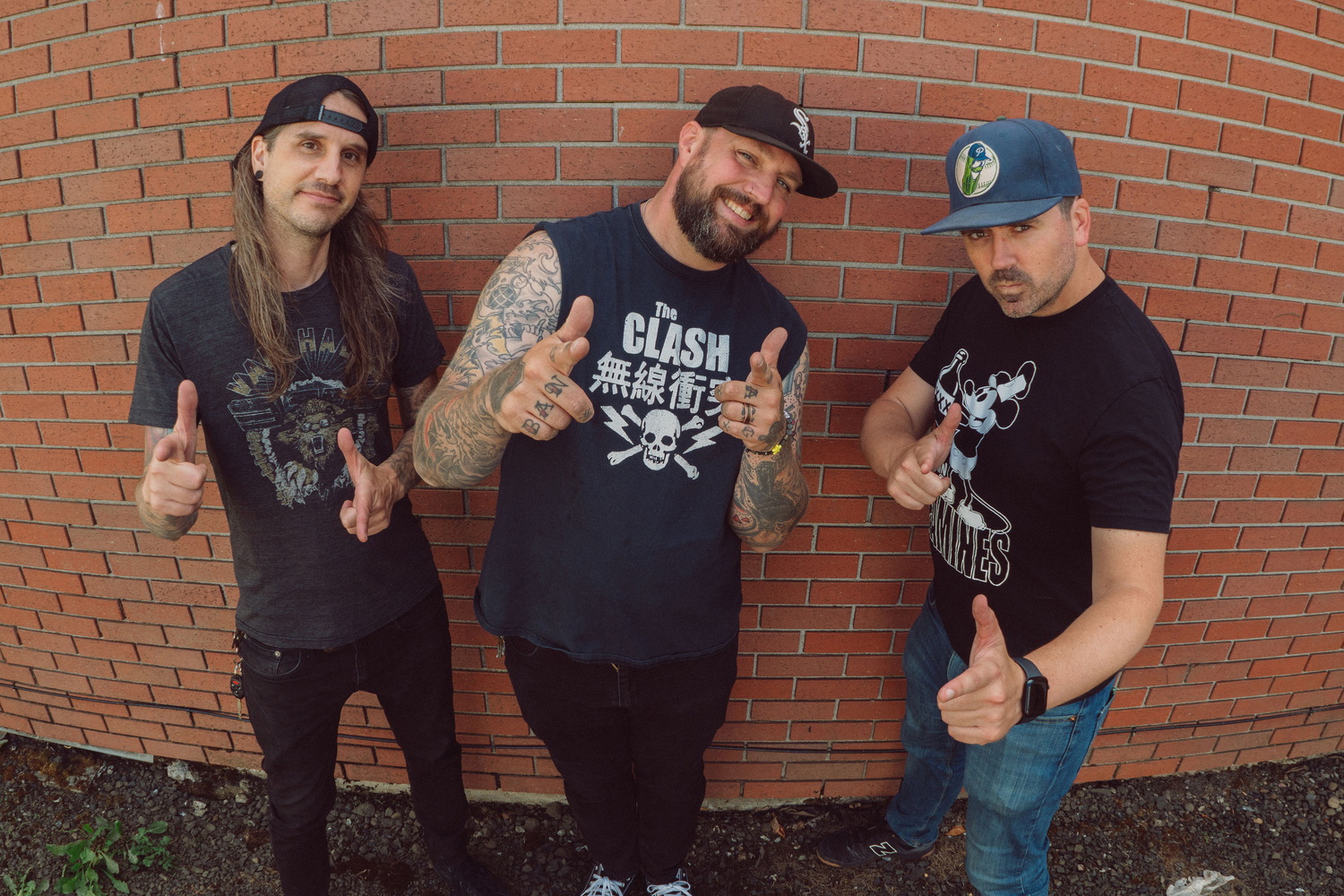
PRETTY DEADLY
Pretty Deadly is a Dallas, Oregon-based punk rock trio born from a one-off studio jam that turned into something too fun to walk away from. Formed in early 2025, the band features Blaine (guitar/vocals), Travis (bass/vocals), and Zach (drums)—three longtime players with over three decades in the punk scene under their belts.
Pretty Deadly isn’t here to reinvent the wheel. They’re here to keep it loud, fast, and honest. Rooted in the golden age of '90s and early 2000s punk—from SoCal skate punk to the grittier corners of Pacific Northwest alt-rock—their sound blends melody and grit, simplicity and sneer. There are no rules, just whatever hits in the moment. Sometimes that means channeling sad or pissed-off lyrics through a pop melody played at breakneck speed. Sometimes it leans darker and heavier. But it always stays true to the core: no stress, no filler, just three friends making noise they love.
Less is more. No bullshit. That’s Pretty Deadly.